
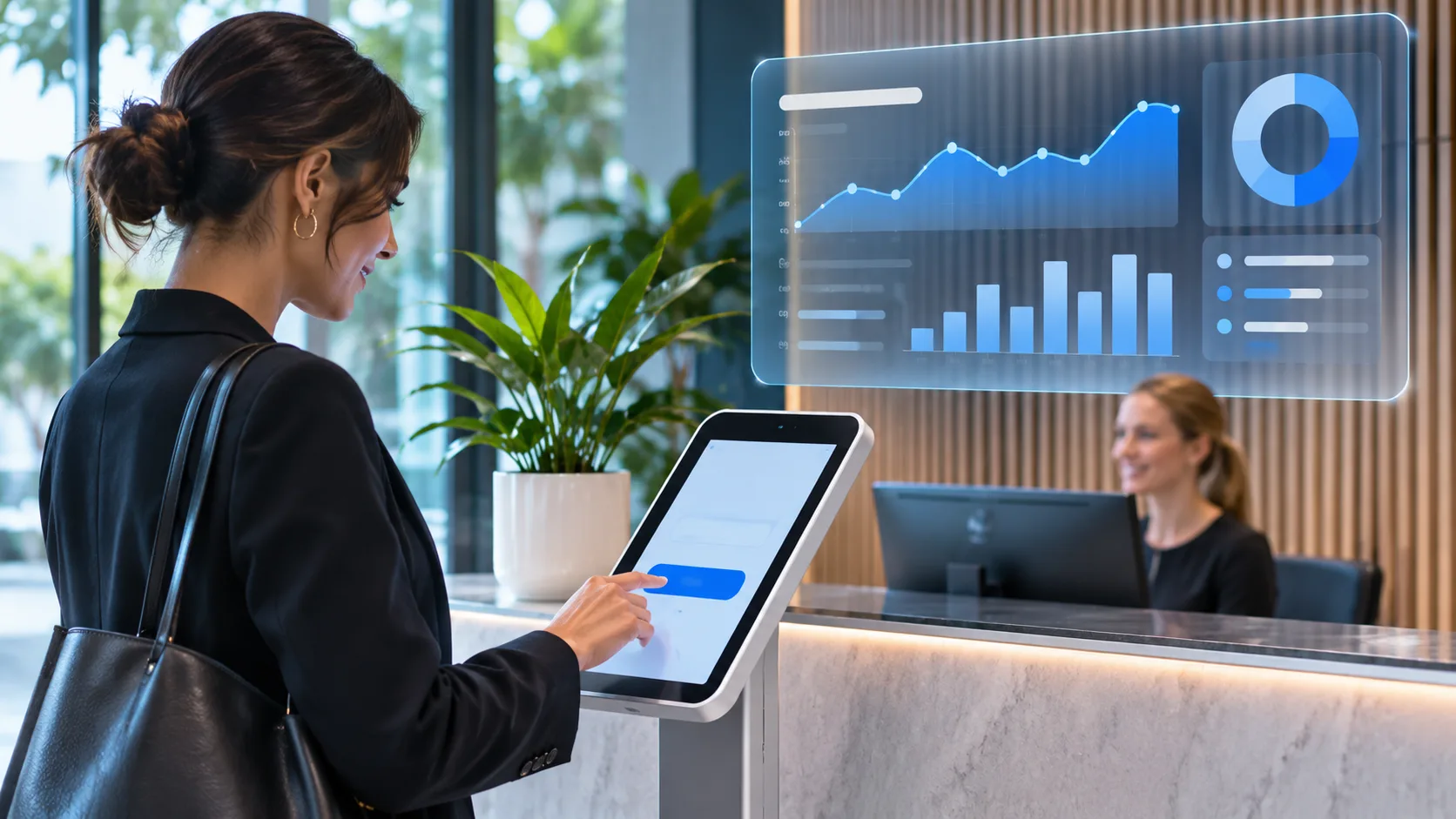
Every check-in tells a story. Is your organisation paying attention?
Every day, visitors, contractors, suppliers and business partners arrive at workplaces across Australia. They check in, attend meetings, complete their work and leave.
For many organisations, the information collected during these visits serves a single purpose: maintaining a record of who entered the building.
But what if those records could tell you something more?
Visitor data is an often-overlooked source of workplace intelligence. When collected responsibly and analysed effectively, it can reveal operational patterns, identify inefficiencies and support better business decisions.
Here is what your visitor data could be telling you about your workplace.
1. When Your Workplace Is at Its Busiest
Do you know which days or hours generate the most visitor traffic?
Visitor data analytics can help organisations identify peak arrival periods, seasonal fluctuations and recurring patterns in workplace activity.
For example, a corporate office might discover that most external meetings take place on Tuesdays and Wednesdays, while a manufacturing facility might experience increased contractor arrivals early on Monday mornings.
Understanding these patterns can help businesses:
- Allocate reception staff more effectively.
- Reduce congestion during peak arrival periods.
- Coordinate scheduled visits.
- Improve resource planning.
Rather than relying on assumptions, workplace managers can make decisions based on recorded activity.
2. How Efficient Your Reception Really Is
A reception area is more than an entrance. It is the first operational touchpoint between your organisation and the outside world.
Frequent arrivals, incomplete sign-outs and inconsistent registration processes may indicate opportunities to improve reception operations.
Where relevant timestamps are available, organisations can also assess how long visitors spend completing check-in or waiting for their hosts.
A digital visitor management system creates more structured records, making it easier to identify patterns that might otherwise go unnoticed.
Sometimes, improving the visitor experience begins with understanding what is slowing it down.
3. Who Is Actually Visiting Your Workplace
Not all visitors arrive for the same reason.
Your workplace may welcome customers, contractors, delivery drivers, consultants, suppliers and prospective business partners.
By categorising visitors through different sign-in workflows, organisations can better understand the nature of their external workplace activity.
A high proportion of contractor visits, for example, may indicate a growing need for more structured contractor management and compliance processes.
Meanwhile, increasing customer visits may highlight the importance of investing in a more professional reception experience.
Understanding your visitor mix helps you build workplace processes around actual operational needs.
4. How Your Workplace Changes Over Time
Workplaces are constantly evolving.
Business growth, hybrid working arrangements, new projects and organisational changes can all influence how people interact with physical locations.
Historical visitor data can help identify changes such as:
- Increasing or decreasing visitor numbers.
- Changes in contractor activity.
- Seasonal demand fluctuations.
- Shifts in external meeting frequency.
- Differences in activity across workplace locations.
While visitor numbers alone cannot explain why these changes occur, they can provide a useful starting point for further investigation.
Over time, these insights can support more informed workplace planning.
5. Whether Your Site Access Procedures Are Working
Having workplace security procedures is one thing. Knowing whether they are consistently followed is another.
Visitor records can help identify potential gaps in site access processes, including incomplete registrations, missing departure records or unusual arrival patterns.
For organisations managing contractors, registration and compliance records can also support reviews of whether required documentation and inductions have been completed.
These insights are particularly valuable in environments where workplace safety and controlled access are important, such as manufacturing facilities, schools, warehouses and industrial sites.
Visitor data does not replace physical security measures, but it can help organisations identify areas that require closer attention.
6. How Different Workplace Locations Operate
For organisations with multiple sites, visitor data becomes even more valuable.
A centralised visitor management platform can help workplace managers compare recorded activity across locations without relying on separate paper sign-in books or disconnected spreadsheets.
One location might experience significantly higher visitor traffic, while another may receive more contractors or after-hours arrivals.
These differences can inform decisions about staffing, reception technology, site-specific registration workflows and operational resources.
Instead of applying the same approach to every workplace, organisations can develop processes that reflect the needs of individual locations.
7. How Prepared Your Workplace Is for an Emergency
During an emergency, knowing who is on-site can be critical.
Accurate visitor check-in and check-out records can support emergency evacuation procedures by helping designated personnel identify recorded occupants.
Historical records may also reveal issues such as frequent missed sign-outs or inconsistent registration practices.
Identifying these gaps before an emergency occurs gives organisations an opportunity to improve their procedures and strengthen preparedness.
A digital visitor management system should support established emergency plans, not replace them.
Turning Visitor Data Into Action
Collecting information is only the beginning. The real value comes from using it to make meaningful improvements.
| Visitor data | Potential business action |
|---|---|
| Peak arrival periods | Adjust reception resources |
| Frequent contractor visits | Review contractor management processes |
| Incomplete sign-outs | Improve departure procedures |
| High visitor traffic | Consider self-service check-in |
| After-hours arrivals | Review site access procedures |
| Differences between locations | Optimise site-specific operations |
Organisations do not necessarily need complex analytics tools to start making better decisions. Reviewing visitor reports regularly and identifying recurring patterns can be a valuable first step.
Visitor Data and Privacy: Finding the Right Balance
While visitor information can provide valuable operational insights, organisations must also handle it responsibly.
Businesses should collect only the information necessary for legitimate purposes, restrict access to authorised personnel and establish appropriate data retention practices.
Where possible, aggregated or de-identified data should be used for workplace trend analysis.
The objective is not to monitor individuals unnecessarily. It is to better understand how the workplace operates while respecting the privacy of everyone who enters it.
From Visitor Management to Workplace Intelligence
A visitor management system should do more than replace a paper sign-in book.
With digital check-in, centralised visitor records and reporting capabilities, Teamgo helps organisations gain greater visibility into workplace activity and access the information they need to make more informed operational decisions.
Whether you manage a single office or multiple workplace locations, understanding who arrives, when they arrive and how they interact with your workplace can help you identify opportunities for improvement.
Your workplace is already generating valuable information. It’s time to put it to work.
Discover how Teamgo can help you turn everyday visitor records into meaningful workplace insights.