Your visitor has arrived. But does the person they’re meeting know? It’s a small question Teamgo Visitor Management Software found that reveals a surprisingly common gap in the modern workplace.
Picture this. A client arrives at reception, signs in and takes a seat. The receptionist calls their host, but there’s no answer. Perhaps they’re in a meeting, working on another floor or simply away from their desk. A second call follows. Maybe an email. Eventually, someone comes to collect the visitor. Nothing particularly unusual has happened. In fact, this is how many workplaces have managed arrivals for years.
But here’s the question: Why does something as simple as letting an employee know their visitor has arrived still require so much effort?
The Problem Isn’t the Arrival. It’s What Happens Next.
For a long time, reception has served as the communication bridge between visitors and employees.
Someone arrives, provides their details, and the receptionist contacts the person they’re meeting. It’s a familiar routine, but one built around manual communication. Now consider how much the workplace itself has changed. Employees move between meeting rooms, floors and buildings. Hybrid working has made fixed desks less common, while many organisations manage visitors across multiple sites.
Yet in some workplaces, notifying a host still depends on a phone call being answered. The result isn’t always a major disruption. More often, it’s a collection of small delays: a visitor waiting at reception, an employee missing a call, or a receptionist spending several minutes trying to locate someone. Individually, these moments seem insignificant. Repeated throughout the working day, they can create unnecessary administrative work and an inconsistent arrival experience.
Checking someone in is only half the process.
The other half is making sure the right person knows they’re there.
So, How Should Employees Be Notified?
The answer is simpler than many organisations might expect: connect visitor check-in directly to employee communication.
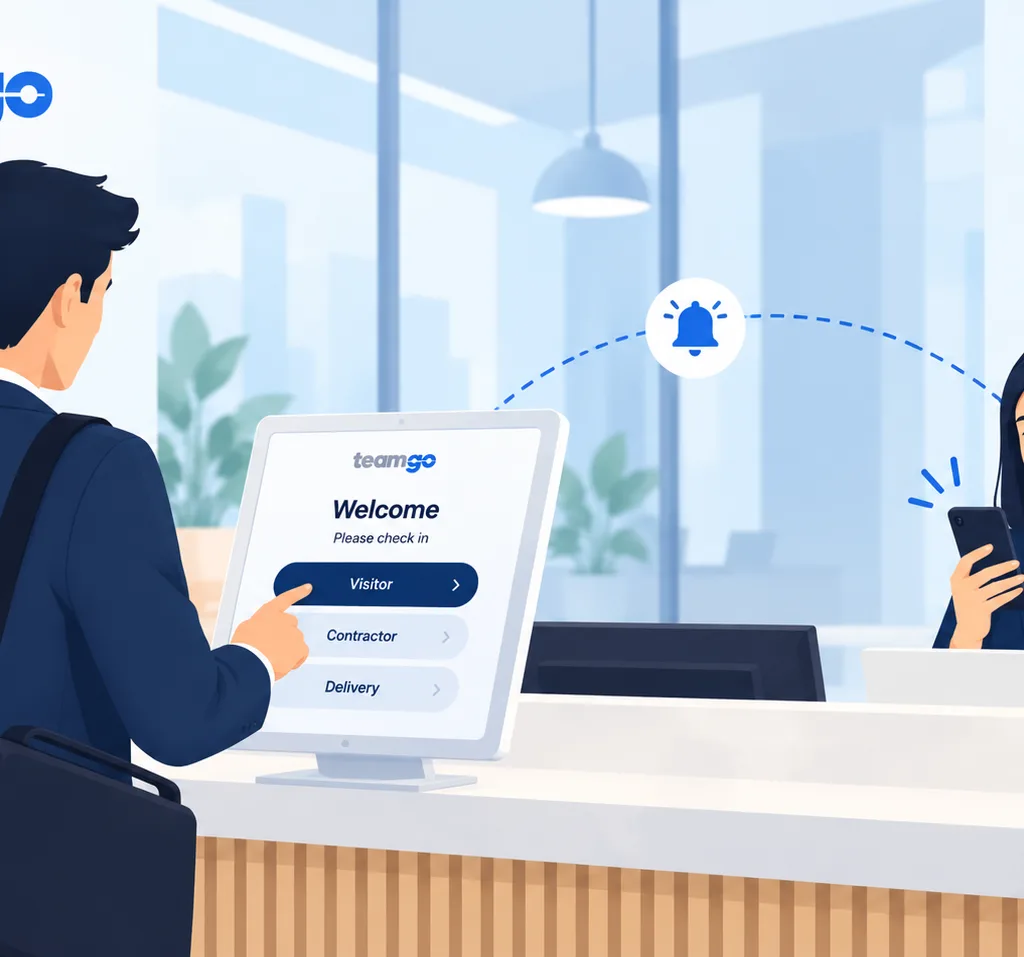
Rather than treating notification as a separate task for reception, a digital visitor management system can make it part of the arrival process. When a visitor checks in, they provide their details and identify the employee they’re meeting. Once the check-in is completed, the system can automatically send an arrival notification to that host.
No additional phone call. No manual message. No need for reception to coordinate every routine arrival. Of course, not every workplace communicates in the same way. For an office-based employee, an email notification may be perfectly suitable. For someone moving around a warehouse, campus or industrial facility, an SMS or mobile notification may be more practical. Some visitor management platforms also support integrations with workplace communication tools.
The goal isn’t to introduce another notification for employees to manage. It’s to deliver useful information through a channel they’re already likely to see.
A Visitor’s First Five Minutes Matter
Think about the last time you arrived somewhere for a meeting. Did you know where to go? Was the sign-in process clear? Did someone acknowledge your arrival? How long did you wait before meeting your host?
These details may seem minor, but together they shape the experience of visiting a workplace. A visitor who can check in easily and be welcomed promptly is more likely to experience the organisation as prepared and professional.
And this matters beyond client meetings. A job candidate arriving for an interview, a contractor attending a scheduled appointment or a business partner visiting for the first time all benefit from knowing that their arrival has been recognised.
Automated host notifications won’t solve every aspect of visitor experience. But they can remove one common source of uncertainty between the front door and the meeting room.
Does This Mean Reception Becomes Less Important?
Quite the opposite. Reception teams often manage far more than visitor arrivals. They answer enquiries, coordinate deliveries, assist guests and help keep the workplace running smoothly. Repeatedly calling employees to announce visitors is only one part of that workload, but it’s also a task that can be automated.
When routine arrival notifications happen automatically, reception staff can spend less time chasing responses and more time supporting visitors who genuinely need assistance. Technology doesn’t have to replace the human welcome. Sometimes, its most valuable role is removing the administrative steps that get in the way of it.
The Bigger Question: Who Is Actually on Site?
Notifying an employee is one part of a much broader workplace challenge.
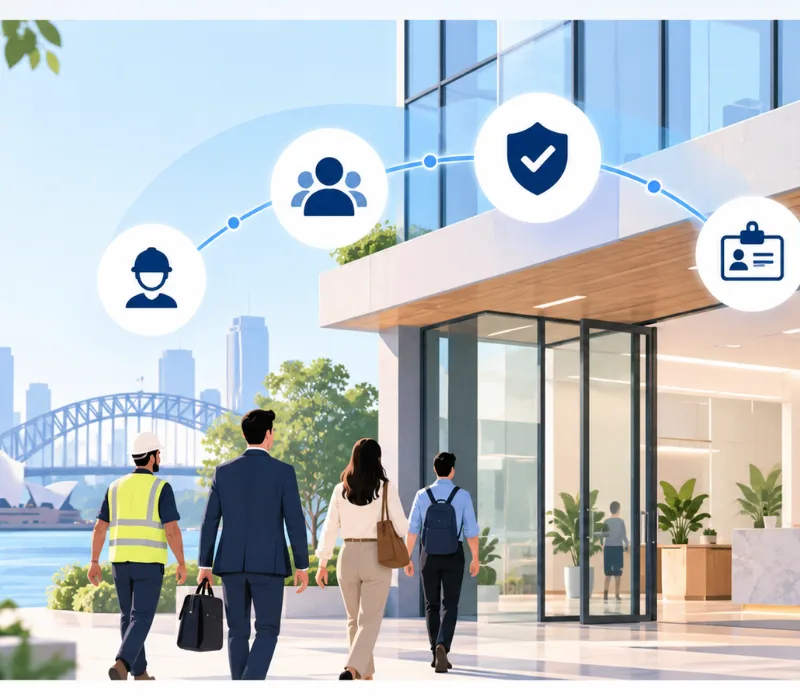
Once a visitor has checked in, the organisation may also need to know who they are, whom they’re visiting, when they arrived and whether they’re still on site. This information becomes particularly relevant in larger workplaces, facilities with multiple entry points and environments where visitor visibility is important for security and emergency procedures.
A handwritten sign-in book might record a visitor’s name, but it doesn’t automatically communicate their arrival to the host or provide the same level of accessible, centralised information as a digital system. This is where visitor management begins to move beyond reception.
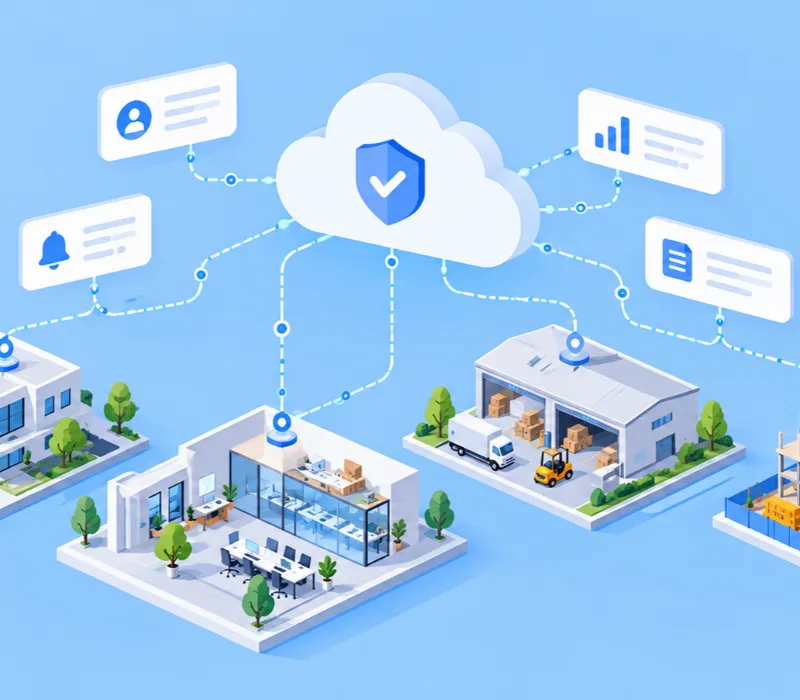
Digital visitor records can help organisations maintain a clearer picture of workplace activity, while host notifications ensure arrival information reaches the employee responsible for the visit. The two functions serve different purposes, but together they create a more connected process.
Bringing the Arrival Experience Together With Teamgo
For workplaces looking to simplify visitor communication, Teamgo brings check-in, host notifications and visitor records into one visitor management platform.
Visitors can sign in using supported options such as an iPad or Android kiosk, QR code or web-based check-in. During the process, they can identify the employee they’re visiting, allowing Teamgo to send an arrival notification to the appropriate host. Depending on the organisation’s subscription and configuration, notifications can be delivered through supported channels including email, SMS and mobile alerts.
For expected visitors, Teamgo’s pre-registration capabilities can also help organisations prepare before arrival by sending invitations and check-in information in advance. This means the experience doesn’t have to begin with a visitor standing at reception, waiting for someone to work out who they’re meeting.
Instead, the arrival can be part of a more organised process, from the invitation through to check-in and host notification. For businesses managing multiple locations or different visitor types, these connected workflows can help create a more consistent approach to welcoming people.
A Better Welcome Starts Before the Handshake
There’s something interesting about visitor management: some of its most meaningful improvements happen in moments people barely notice.
A visitor checks in. An employee receives a notification. The meeting begins. No repeated phone calls, no unnecessary coordination and fewer awkward minutes spent waiting at reception.
It’s a relatively small operational change, but one that reflects a larger shift in how workplaces think about the people entering their buildings. Because a modern reception experience isn’t simply about recording arrivals.
It’s about connecting visitors with the people, information and processes they need. And a good welcome begins when the right person knows you’re there.
Make Every Arrival a Smarter One
From digital check-in to automated host notifications, Teamgo helps workplaces create a more connected visitor experience.